 Modista
The U.S. Bicentennial was not a single coin release. It was a multi-year national project that reshaped how the Mint approached commemoration, scale, and public engagement. From 1972 through 1976, coins and medals were issued under the supervision of the American Revolution Bicentennial Administration (ARBA), aiming to celebrate 200 years of independence.
What made the Bicentennial unique was scope. Instead of a limited commemorative program, the Mint redesigned circulating coinage used by millions, while also producing an extensive medal series documenting Revolutionary history. Let’s see the medal and 1976 quarter value for collectors and historians step by step.
A Dual Approach: Circulation and Commemoration
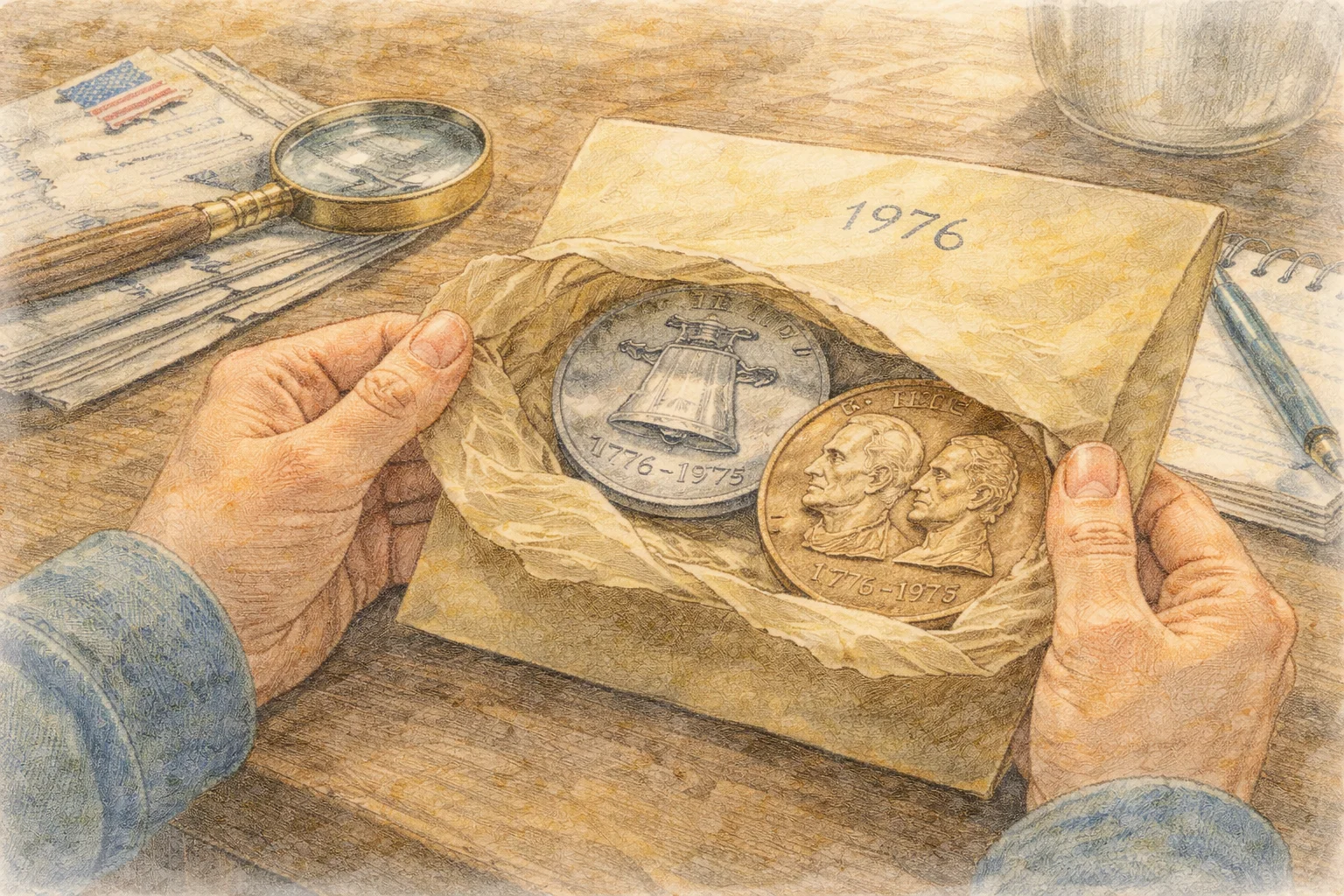
The Bicentennial program worked on two parallel tracks:
- Mass circulation coins meant to be spent, saved, and recognized instantly
- Collector medals and proof issues aimed at long-term preservation
This structure explains why Bicentennial items range today from pocket change to five-figure gold medals.
Circulating Coins with a National Message
For the first time since the early 20th century, multiple U.S. denominations carried commemorative reverses simultaneously.
Key features of the Bicentennial circulating coins:
- Dual-dated obverses: 1776–1976
- Designs chosen through national competitions
- Issued beginning in 1975, not 1976
The most recognizable design easily found via the coin identifier app is the Washington quarter with the drummer boy reverse, created by Dennis R. Williams. Kennedy half dollars adopted Independence Hall, while Eisenhower dollars featured the Liberty Bell superimposed on the Moon.
Despite the celebratory intent, production was anything but limited.
Mintage on an Unprecedented Scale
The Mint chose visibility over scarcity. As a result, Bicentennial coins flooded circulation.
Approximate clad mintages:
- Washington quarter: ~988 million (Philadelphia), ~859 million (Denver)
- Kennedy half dollar: hundreds of millions combined
- Eisenhower dollar: tens of millions
In total, more than 1.6 billion clad Bicentennial coins entered circulation. This decision shaped their long-term market behavior and explains why most examples remain affordable today.
Silver Proofs and Collector Variants
Alongside circulation strikes, the Mint produced 40% silver proof versions at San Francisco.
These included:
- Quarters, halves, and dollars
- Sold individually and in three-coin silver proof sets
- Approximately 11 million silver Bicentennial quarters struck
These issues were marketed directly to collectors and remained available for years. Unsold inventory was eventually melted, limiting surviving quantities but not enough to create broad rarity.
Early Design Transitions
Collectors often overlook a subtle but important detail: Type 1 and Type 2 quarter reverses.
- Type 1: Bold lettering, earlier strikes
- Type 2: Thinner lettering, later production
While both are common and show accessible prices at the coin worth app, they illustrate how production evolved mid-program and add depth to type-set collecting.
Why the Bicentennial Still Matters
Even without widespread scarcity, Bicentennial issues remain historically important because they:
- Marked the first major redesign of circulating U.S. coins in decades
- Introduced the public to commemorative circulation coinage
- Set the template for later programs
The Bicentennial Medals Program: History Cast in Metal
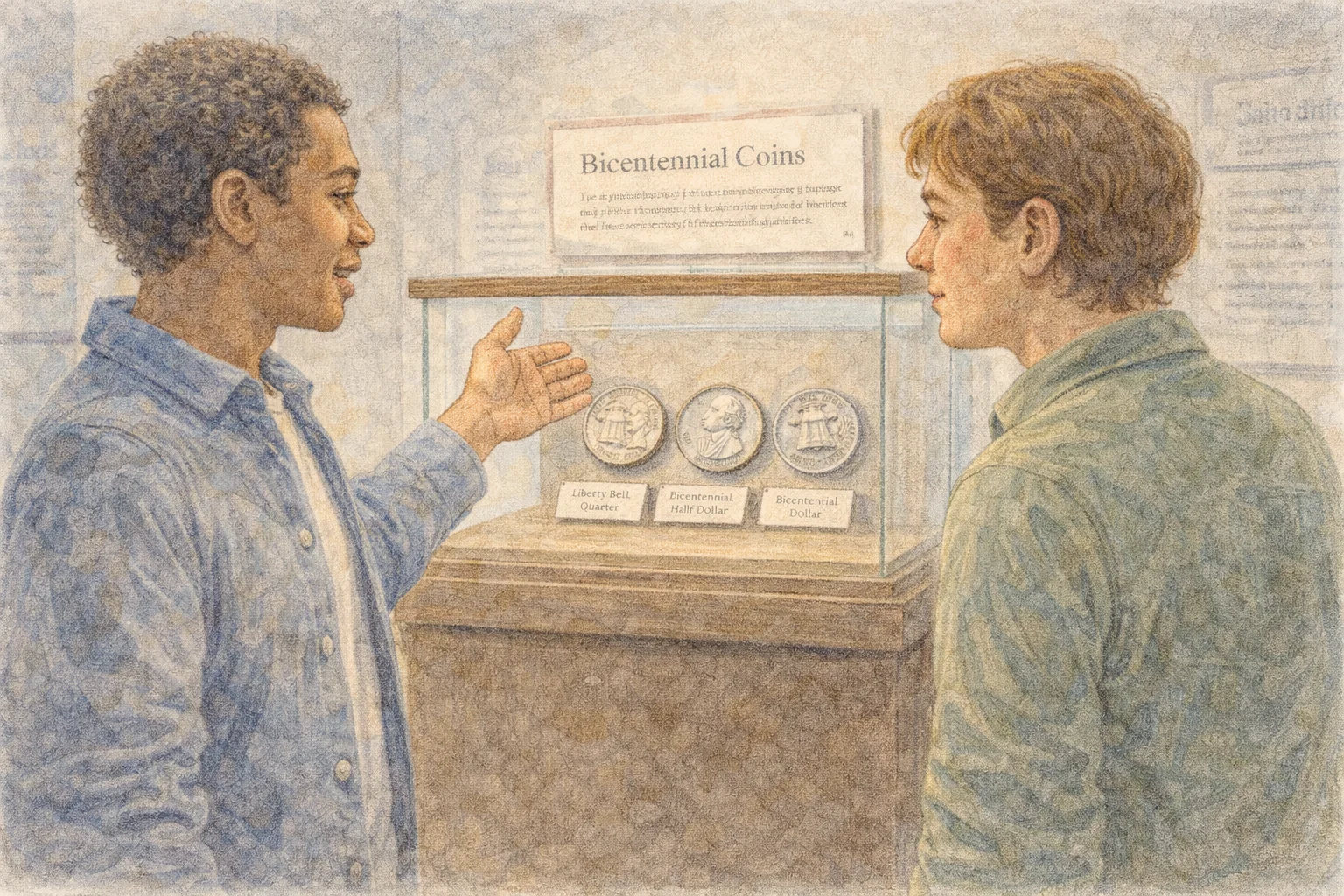
While circulating coins carried the Bicentennial message into daily life, the commemorative medals program preserved it in far greater detail. Authorized by the American Revolution Bicentennial Administration, this series was designed for collectors, historians, and institutions rather than commerce.
Between 1972 and 1976, the U.S. Mint issued 21 official Bicentennial medals, each dedicated to a key moment, place, or figure from the American Revolution. Together, they form one of the most ambitious medal programs in U.S. history.
A Chronological Narrative of Independence
Unlike the circulating coins, which focused on symbolism, the medals told a story.
Each issue marked a specific milestone:
- Washington at the Liberty Tree (1775)
- Lexington and Concord (1775)
- Declaration of Independence (1776)
- Yorktown and the end of major hostilities
The series progressed year by year, aligning releases with anniversaries rather than denominations.
Design Leadership and Artistic Style
All medals were designed under the direction of Chief Engraver Frank Gasparro, whose style shaped much of U.S. coinage in the 1960s and 1970s.
Common design traits include:
- High-relief portraits and architectural scenes
- Classical inscriptions with restrained typography
- Medallic, not coin-like, compositions
Gasparro’s approach echoed earlier presidential medals and cinematic commemoratives, emphasizing narrative clarity over abstraction.
Formats, Metals, and Sizes
The Bicentennial medals were offered in multiple formats to reach different audiences.
Available materials included:
- Bronze (most common)
- .900 fine silver
- Gold-plated versions
- Solid gold medals for select designs
Sizes ranged from 0.906 inches to 3 inches, with weights increasing accordingly. The largest and most ambitious issues were struck in solid gold.
The National Bicentennial Medal
The centerpiece of the program was the National Bicentennial Medal.
Key specifications:
- Obverse: Statue of Liberty
- Reverse: Great Seal of the United States
- Diameter: 38 mm (silver) and larger gold versions
- Silver mintage: approximately 209,000 pieces
This medal became the program’s best seller and remains the most widely encountered today.
Gold Medals: Limited by Design
Gold medals represent the true rarity tier of the Bicentennial program.
Notable facts:
- Largest gold issues reached 3 inches in diameter
- Composed of .900 fine gold
- Some mintages limited to 424 pieces
- Original issue price near $4,000 in the 1970s
Adjusted for inflation, that price exceeds $20,000, placing these medals beyond casual collecting even at release. Today, they trade primarily as bullion-backed historical artifacts.
Medal Program Snapshot
| Category | Notable Examples | Formats |
| Bronze Medals | Washington, Liberty Tree | 38–76 mm |
| Silver Medals | Lexington–Concord, Declaration | .900 silver |
| Gold Medals | National Bicentennial (3″) | .900 gold |
| Flagship Issue | Statue of Liberty / Great Seal | Silver & gold |
Sales and Distribution
Medals were sold by mail order between January and July 1976, promoted through Bicentennial events and official publications. Unlike modern Mint releases, there were no instant sellouts. Demand built gradually, and availability remained open for months.
This slower pace explains why many medals survived in excellent condition—and why values today depend more on metal content and format than hype.
Collecting Bicentennial Coins and Medals Today
Nearly fifty years later, Bicentennial issues occupy a unique place in U.S. numismatics. They are neither rare by default nor obsolete curiosities. Their value depends on format, material, and context, not on the patriotic theme alone.
Where Circulating Coins Fit
Clad Bicentennial quarters, halves, and dollars remain among the most accessible historical U.S. coins.
They work best as:
- Type set representatives of 1970s coinage
- Educational pieces illustrating design changes
- Entry-level collectibles with stable pricing
Circulated examples still trade near face value. Uncirculated pieces add modest premiums. The appeal lies in completeness, not speculation.
Silver Proofs: The Practical Collector Tier
The most balanced category for collectors sits in the silver proof sets.
Advantages include:
- Precious metal content
- Direct Mint origin
- Consistent availability
Typical market ranges:
- Individual silver proof coins: $10–$50
- Complete three-piece sets: modest premiums above melt
These coins offer historical significance without exposure to hype-driven pricing.
Medals as Historical Artifacts
The Bicentennial medal series appeals to a different audience. These pieces reward collectors interested in design, narrative, and material variety.
What to prioritize:
- Complete silver medal runs
- Lower-mintage gold issues
- Original packaging and documentation
Gold medals remain the scarcest category, but their prices track bullion closely rather than collector demand alone.
Organizing and Verifying Bicentennial Items
Many Bicentennial pieces surface through inheritance or family collections. Identifying formats accurately matters.
Some collectors photograph coins and medals and review details—year, composition, diameter, weight, and standard market ranges—using tools like the Coin ID Scanner app. Digital logs help separate clad circulation coins from silver proofs and medal issues quickly, avoiding misclassification.
A Balanced Collecting Approach
For most collectors, a sensible Bicentennial collection includes:
- One example of each circulating denomination
- One silver proof set
- One representative silver medal
This structure captures the program’s full scope without unnecessary cost.
The Bicentennial releases of the U.S. Mint reflect an era when national celebration shaped coinage on a massive scale. Circulating coins brought history into everyday life. Medals preserved it with detail and craftsmanship.
Today, their value lies in understanding—not assumption. Collectors who approach Bicentennial coins and medals with clear expectations gain history, artistry, and stability rather than disappointment.